Bedding · Fit & Care
Keeping Bedding in Place on Split Adjustable Beds
A split adjustable bed offers two sleepers the freedom to find their own comfortable position. The bedding, however, has to keep pace: moving independently at the head or foot can tug fabric out of place, shift a protector, or leave a sheet gathered where it should lie smooth. A thoughtful approach to dimensions, depth, construction, and care can make the setup feel as composed as it looks.
The secret is less about choosing the most elaborate bedding and more about matching each layer to the way the bed is built and used.
First, understand what “split” means
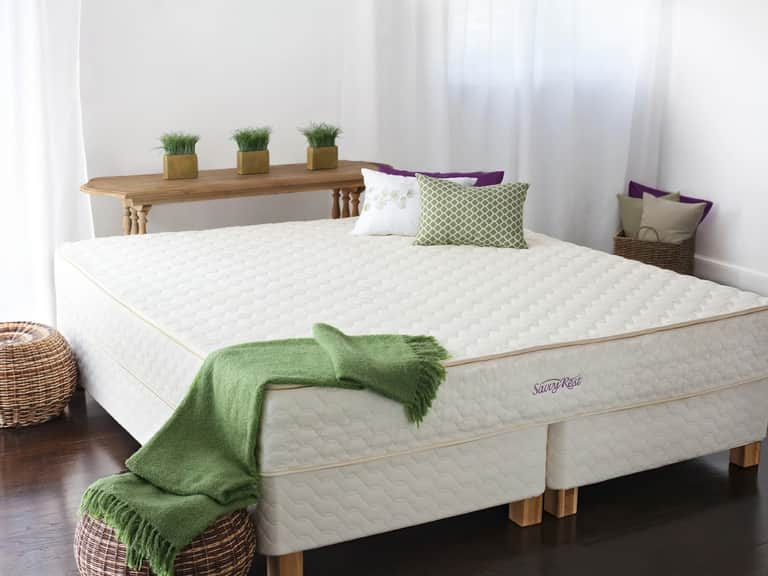
Split adjustable beds are not all configured in the same way. In a common split-king arrangement, two Twin XL mattresses sit side by side on an adjustable base. Each mattress can move separately, allowing one sleeper to raise the head or feet without requiring the other side to follow. Other configurations may use different mattress sizes or a single mattress designed to flex across a divided base.
That distinction matters because bedding is sized for the mattress, not simply for the footprint of the bed frame. A pair of Twin XL mattresses generally needs two individual fitted sheets and two mattress protectors. A shared top sheet, duvet, or coverlet may still work, depending on how much independent movement the sleepers want. A mattress made to span a split base calls for a different approach: its own dimensions and manufacturer’s guidance should determine the bedding choice.
Before shopping, identify the exact setup. Check the labels or paperwork for each mattress, confirm whether the halves are separate or connected, and note whether the base has a gap between them. What looks like a “split king” in a bedroom may not use the same mattress construction as another bed with the same name. The right measurements prevent the familiar mismatch: a sheet that seems generous at first, then pulls loose as soon as the bed articulates.
- Confirm the size of each mattress individually.
- Establish whether the bed uses two separate mattresses or one split-compatible mattress.
- Record each mattress’s depth, including any pillow-top or added comfort layer.
- Check the base and mattress maker’s recommendations before adding accessories.
Why ordinary bedding can shift
On a stationary bed, fitted bedding is asked to stay put through ordinary nightly movement. On an adjustable bed, it has another job: it must accommodate a changing angle. When the head or foot rises, the mattress surface bends and the fabric travels with it. If the sheet has too little stretch, too shallow a pocket, or a loose fit, the movement can draw it toward the centre or pull an elastic corner free.
The challenge becomes more noticeable when the two sides move in different directions. A sheet laid across both mattresses may bridge the centre seam. As one side lifts and the other remains flat, the fabric can tighten across the divide, bunch, or tug at the edges. A protector that is too small or too taut may behave similarly. These are not necessarily signs of a faulty base; often, the bedding simply has not been selected for the dimensions and movement involved.
Fit also changes with the mattress itself. A protector or fitted sheet that worked on a thinner bed may be difficult to secure on a deeper model. Conversely, an overly deep pocket can leave surplus fabric that wrinkles beneath the sleeper. A carefully fitted layer should cover the mattress completely, tuck beneath its edges, and remain secure without compressing or distorting the mattress surface.
It is worth taking a moment to observe the bed in motion. Raise and lower each half separately, then check the corners, centre gap, and foot of the bed. A small adjustment at the outset—such as switching from a shared fitted sheet to two separate ones—can make daily use substantially easier.
Choose a mattress protector that can move with the mattress
A mattress protector sits directly on the mattress, beneath the fitted sheet. Its first responsibility is to help shield the mattress from everyday moisture, dust, and wear, according to the protection its materials and construction provide. On a split adjustable bed, it should also fit each mattress securely and bend with it rather than resisting movement.
For separate mattress halves, individual protectors are often the most straightforward choice. Each one can follow its own mattress as the base moves, without creating a taut bridge across the centre. Separate pieces are also simpler to remove for laundering and can be replaced independently if one becomes worn or stained. If you prefer a continuous protector, make sure it is specifically suitable for the full configuration and can accommodate the movement without pulling at the edges.
Stretch is useful, but it is not a substitute for correct sizing. Look for a fitted construction with elastic or a flexible skirt that can hold beneath the mattress while allowing normal articulation. Compare the product’s size with the mattress dimensions, then check its stated maximum depth. A protector designed for a mattress up to 16 inches deep, for example, should only be considered if that measurement suits the mattress and the maker’s fit guidance. A depth limit is not a promise that every mattress of that depth will fit equally well.
Surface feel matters too. A protector that adds noticeable stiffness, sound, or bulk may change the way the bed feels beneath the sheet. If a quiet surface is important, review the material and construction details rather than relying on a generic label. Waterproof protection can be useful where spills or moisture are a concern, while a breathable, non-waterproof layer may be preferable when the priority is a light, minimally altered feel. The right choice depends on the household, not on a single universal definition of “best.”
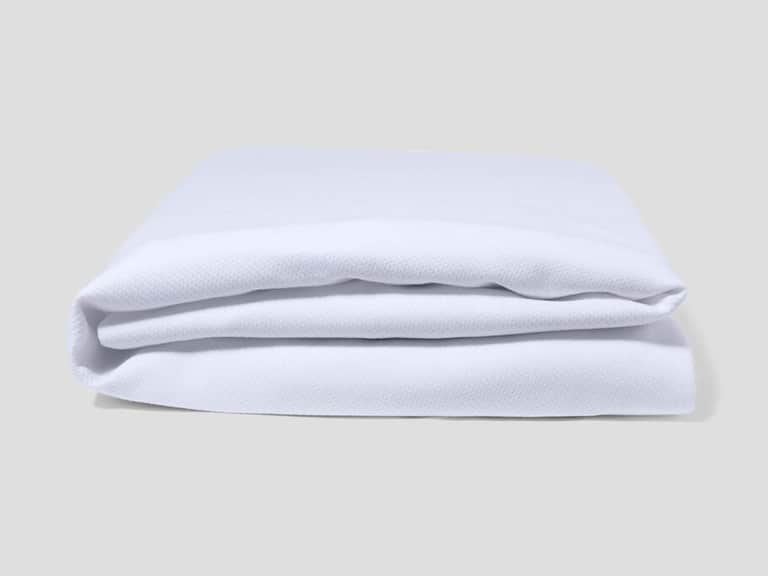
One example of a flexible, waterproof option is the Casper Waterproof Mattress Protector, which is described as fitting mattresses up to 16 inches deep and using stretch materials intended to hug the mattress. Check the mattress dimensions and the protector’s current specifications before deciding whether it suits an individual half of your split setup.
Fitted sheets: two secure foundations
For a split king made from two Twin XL mattresses, two Twin XL fitted sheets are usually the most adaptable arrangement. Each sheet can move with its own mattress, reducing tension across the middle. It also allows each sleeper to choose a preferred fabric or fit, if desired, while keeping the visible bedding coordinated through matching colours or finishes.
When assessing fitted sheets, consider both mattress size and depth. Measure from the top surface to the underside, including any topper that will remain in place. A mattress protector also occupies a little space and can affect how easily a sheet reaches beneath the corners. Check the sheet’s pocket range and elastic construction, and avoid assuming that “deep pocket” means a precise fit for every mattress. Manufacturers use the term differently.
Elastic that runs around the full perimeter can help a sheet sit more evenly than corner-only elastic, but the cut and fabric matter as well. Knitted fabrics often have more give than crisp woven ones; woven cotton may feel smooth and tailored but can be less forgiving if the dimensions are off. Neither is automatically superior. The goal is a fitted sheet that stays secure during movement without feeling over-stretched or leaving excess material to gather.
Make the bed with the base flat, then raise each side separately to test the fit. If a corner lifts, check whether it was fully tucked beneath the mattress, whether the pocket is deep enough, and whether the sheet is intended for that exact size. If the fabric pulls tightly across the mattress, do not force it into place. A strained fit can slip during use and may put unnecessary tension on the fabric or elastic.
Should you use one top sheet or two?
Top bedding is a matter of comfort and routine. Some couples prefer separate blankets or duvets so each sleeper can adjust coverage independently. Others like the clean, uninterrupted look of one shared coverlet. Both arrangements can work with a split adjustable bed; the difference is how much the bedding should follow each side as it moves.
A shared top sheet or duvet may be perfectly comfortable when the movement is modest and both sleepers tend to adjust the bed in similar ways. But if one side is regularly raised while the other stays flat, a single layer can pull across the centre. A pair of individual blankets or duvets gives each sleeper more freedom and reduces tugging between the two sides. It can also make it easier to remake the bed after one half has been adjusted.
For a softer, more cohesive finish, choose separate pieces in the same colour and texture. Two neatly folded duvets can look intentional rather than mismatched, while a shared bedspread can be placed over them when the bed is flat. If the bed is often left elevated, test how a coverlet drapes before relying on it as the only top layer. A length that looks generous on a flat bed may hang differently once the foot is raised.
Keep heavy decorative layers light enough to move comfortably. A thick quilt or bedspread can slide, weigh down the edge, or bunch when the base changes angle. Consider reserving more substantial layers for styling the bed while it is flat, then removing or folding them aside when using the adjustment features.
Depth, toppers, and the details that alter fit
Mattress depth is one of the easiest details to overlook and one of the most common reasons bedding slips. Measure the mattress from its top surface to its bottom edge. If a topper stays on the bed under the protector or sheet, include its thickness in the fit calculation. A pillow-top, mattress pad, or other layer can change the total height enough to make a previously suitable pocket too shallow.
Be precise about what each depth measurement refers to. A product may state a maximum mattress depth, while another may give the depth of the pocket itself. These are not always interchangeable. Read the fitting instructions and contact the manufacturer when the terminology is unclear, especially if the mattress has an unusual profile or the adjustable base’s movement is pronounced.
Also check the shape of the mattress. Rounded corners, reinforced edges, and a thick perimeter can affect how a fitted cover settles. The more closely the protector and sheet match the mattress’s dimensions and form, the less spare fabric there is to migrate during adjustment. When a mattress is unusually deep or has an added topper, selecting a product with an appropriate range is generally more reliable than stretching a standard-size layer to its limit.
Finally, consider the base. Some adjustable frames have retainer bars or other features intended to help keep a mattress in position. Bedding should not obstruct these components or interfere with the mattress’s movement. Follow the base instructions, and avoid tying or fastening sheets to the mechanism unless the manufacturer specifically permits it.
Care that supports a secure fit
Frequent laundering is part of maintaining a fresh sleep surface, but washing and drying can affect the dimensions and elasticity of bedding. Read the care label before the first wash and follow its temperature, detergent, and drying instructions. High heat can contribute to shrinkage or damage some elastic, waterproof layers, and delicate finishes. Fabric softener may not be suitable for every material, so treat it as a product-specific choice rather than an automatic step.
Wash separate protectors and sheets according to their individual care directions. If a protector has a waterproof membrane, use the method recommended for that construction; aggressive heat or bleach may compromise performance. Make sure each item is completely dry before putting it back on the mattress, and avoid pulling a damp fitted layer tightly into place. Fabric may relax or change shape as it dries.
When removing bedding, take care around the adjustable base’s hinges and moving parts. Lift a mattress only as directed by its manufacturer, and do not pull forcefully on a fitted skirt trapped beneath it. After laundering, recheck the corners and edges with the bed flat. Then operate each side through its usual range and look for slipping, bunching, or tension along the centre.
- Follow the care label for washing temperature and drying method.
- Use separate laundry loads where materials have different care needs.
- Avoid bleach, fabric softener, or high heat unless the instructions allow them.
- Check elastic and seams periodically for stretching, fraying, or loss of grip.
- Keep fabric clear of the base’s moving components and follow its safety guidance.
A simple troubleshooting guide
If a fitted corner comes loose: Recheck mattress size and depth, including any topper. Confirm that the sheet or protector is fully tucked beneath the mattress and is not stretched beyond its intended fit. Test one side at a time to identify whether the movement or the corner placement is contributing to the problem.
If fabric gathers at the centre: Consider using separate fitted sheets and protectors for the two halves. A shared layer may be bridging the split and responding to the different angles. Check that the gap between the mattresses has not widened and that each mattress remains properly positioned on the base.
If the sheet feels too tight: Do not keep forcing the corners down. Compare the product’s size and pocket range with the full mattress depth, including any permanent comfort layer. A deeper or more flexible fitted design may be needed.
If excess fabric wrinkles beneath the sleeper: The pockets may be too deep, the sheet may be oversized, or the fabric may have stretched with use. Smooth the layer while the bed is flat and assess whether it remains secure when elevated. If it continues to bunch, choose a fit better matched to the mattress.
If the protector shifts even though the sheet stays in place: Check its own fitted construction, dimensions, and depth rating. The protector must fit the mattress independently; a secure sheet above it does not correct a protector that is too large or too small.
A considered setup, rather than a complicated one
The most dependable split adjustable bed bedding usually begins with a few clear decisions: identify each mattress, measure its depth, choose a protector that fits that individual mattress, and use fitted sheets suited to its dimensions. From there, decide whether shared top bedding feels comfortable or whether separate duvets better suit the way each side moves.
There is no need to replace every layer at once. Start with the pieces that are shifting, and test the bed through its ordinary range of motion after each change. If the protector stays smooth but the fitted sheet pulls loose, address the sheet’s depth or stretch. If the centre feels taut, separate the layers that are spanning the divide. Small, targeted changes are often more useful than buying an entirely new bedding set.
A split adjustable bed is designed to offer individual movement without sacrificing a composed bedroom. When bedding is correctly sized and arranged for that movement, the result is both practical and quietly polished: a surface that remains comfortable, a mattress that is better protected, and fewer interruptions to the simple ritual of making the bed.
Before you buy: a quick checklist
- Confirm whether the bed uses two separate mattresses or a single split-compatible mattress.
- Measure each mattress and note its full depth, including any topper that will remain in place.
- Match each protector and fitted sheet to the correct mattress size and pocket range.
- Choose flexible construction that can accommodate ordinary adjustment without excessive tension.
- Decide whether one shared top layer or two independent blankets better suits your routines.
- Review the care instructions and the adjustable base and mattress makers’ guidance.
- Test the finished setup by moving each side independently and checking for loose corners or bunching.
Good split adjustable bed bedding does not need to be complicated. It needs to fit the mattress it covers, move without strain, and be easy to care for. With those essentials in place, comfort and order can coexist—on both sides of the bed.